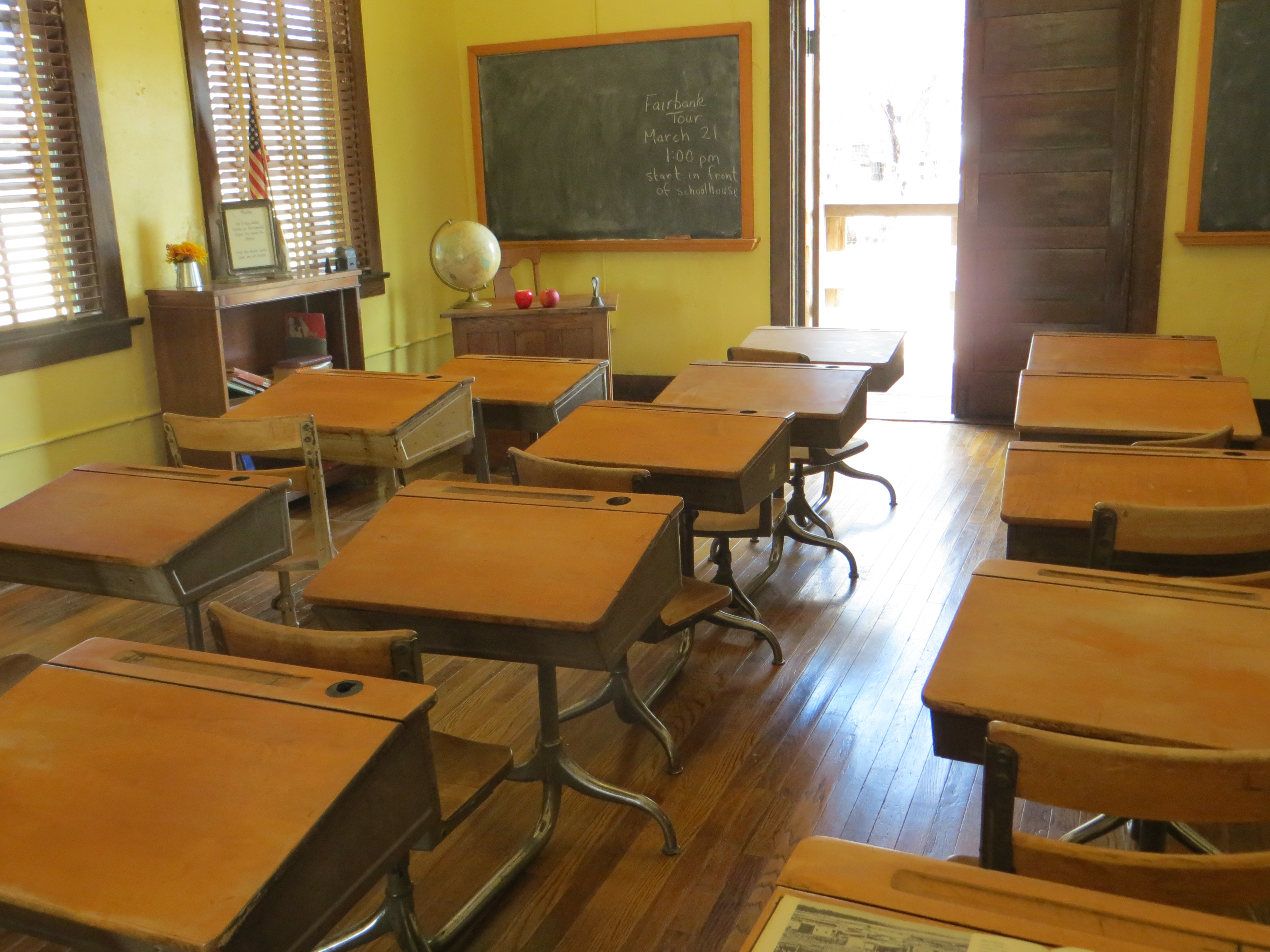
A look inside the two-room Fairbank schoolhouse.
 Think of the Old West and images of gunslingers, saloons and the railroad come to mind. Just eight miles outside Tombstone, you get all that and more in Fairbank, one of the best preserved ghost towns in Arizona. As folks moved West to mine and ranch, towns sprang up all over Cochise County in southeastern Arizona. Some of these towns didn’t survive when the mining industry or cattle business went bust in their area.
Fairbank doesn’t get the traffic of its famous neighbor down the road, but this ghost town with a well-documented history doesn’t disappoint. In addition to some fairly well-preserved buildings, there’s a great train robbery story with a famous Western law man and a gang of outlaws with names like Three Fingered Jack and Juan Bravo. Although less known, the Fairbank Robbery rivals the story of the shootout at the O.K. Corral.
Situated next to the San Pedro River, Fairbank was first settled in 1881. It was the closest train station to Tombstone. Luxury goods and freight for Tombstone came in through the town and ore and cattle went out. On the opposite side of Highway 82 from Fairbank, you can still see the livestock pens where cattle were held for transport.
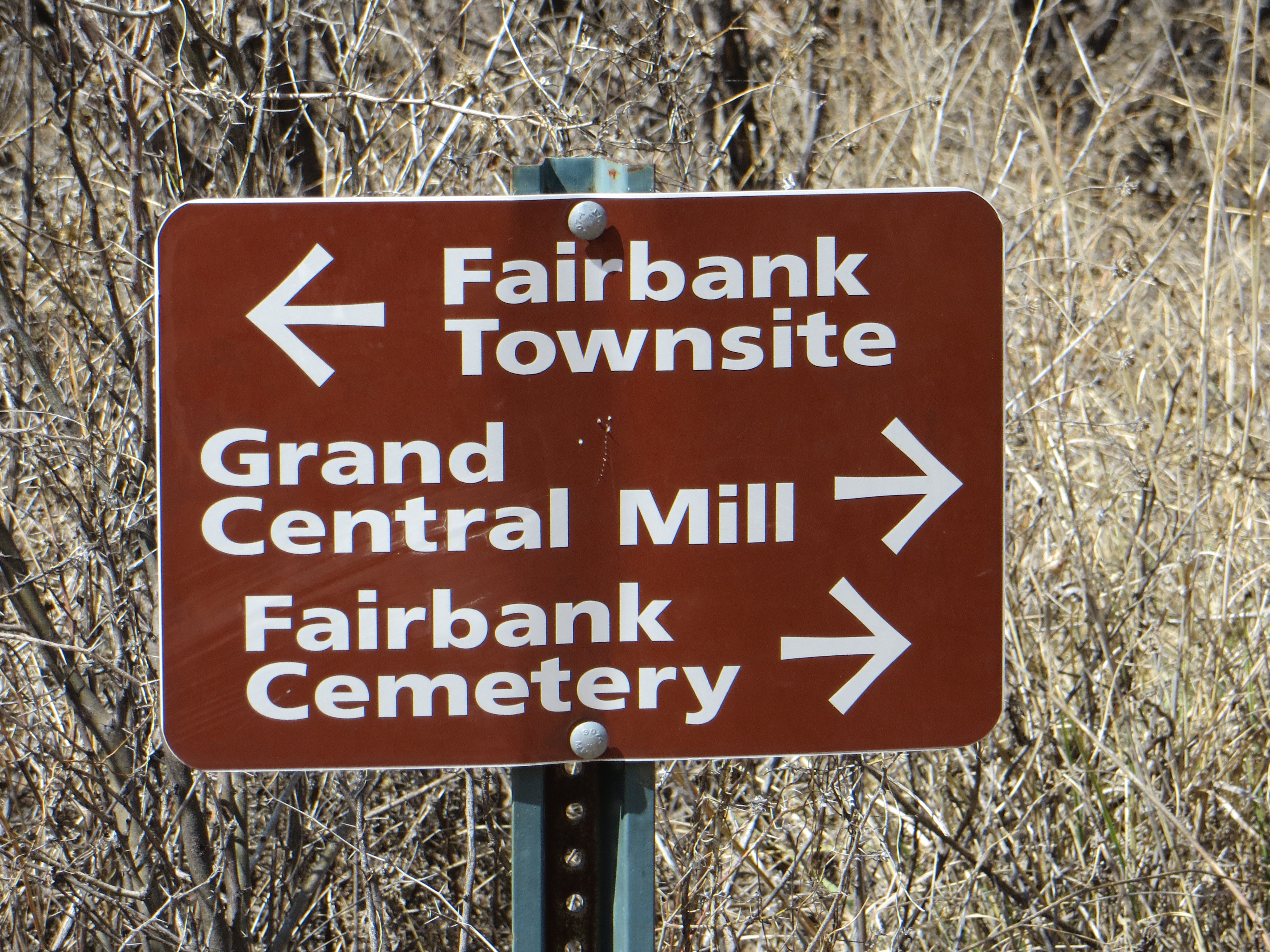
Fairbank is well-maintained by the Bureau of Land Management. You can tour the town on your own. There are lots of signs to point you in the right direction and stop by the Fairbank Schoolhouse (the best preserved building in town) where you can learn more about the town’s history, buy an ice cold bottle of water and purchase souvenirs.
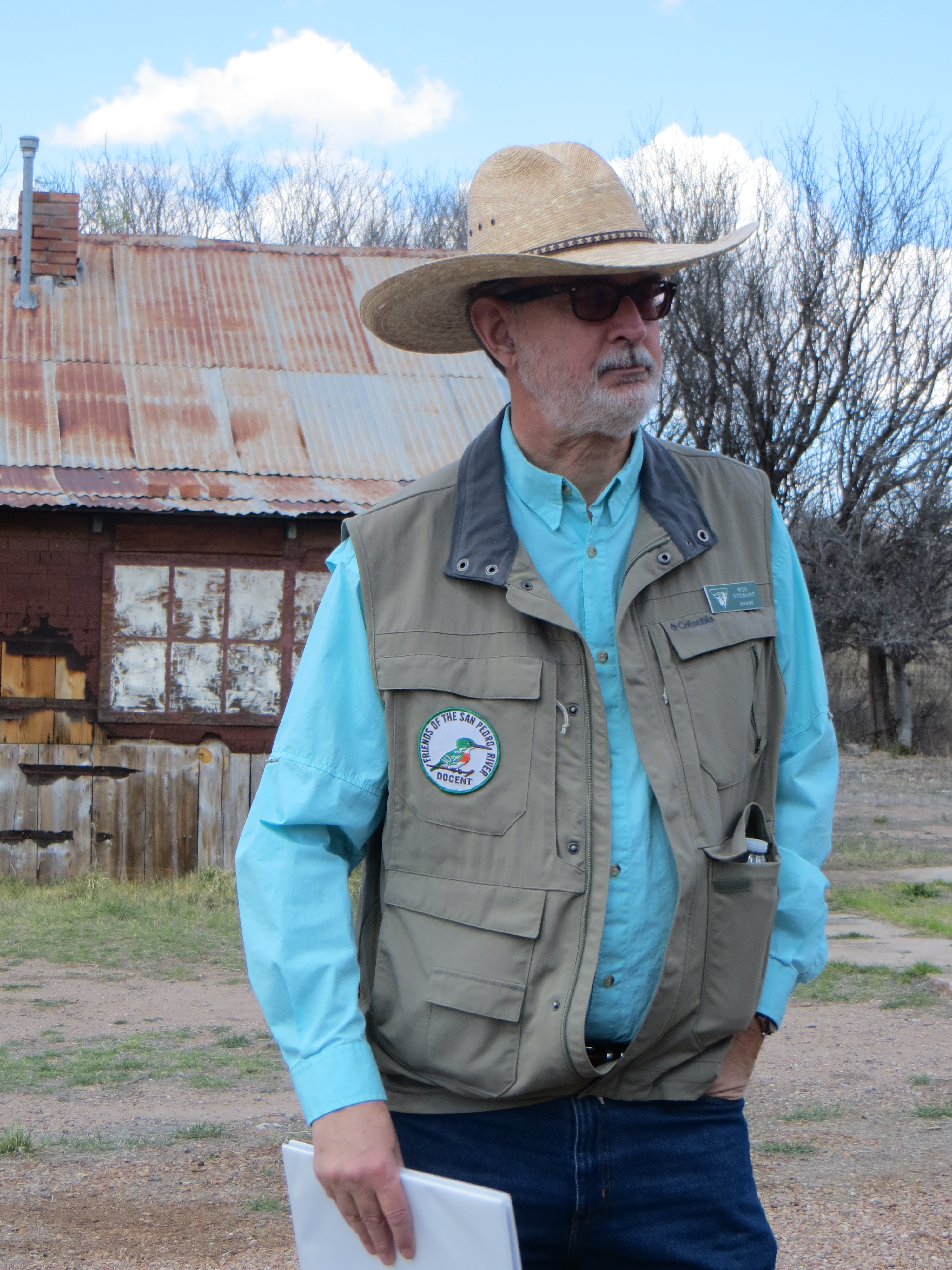
Docent Ron Stewart helps you find the echoes of the past in Fairbank.
You can also take a tour led by a docent from the Friends of the San Pedro River. I took a tour led by Ron Stewart. He worked on Fort Huachuca and for the BLM in the Four Corners area. He is extremely knowledgeable and well-versed in the history of Fairbank. Ron reminded tour participants that visiting a ghost town wasn’t like visiting a museum where exhibits bring history to life. Here, he instructed us, we had to look for echoes of the past.
From the school house we move on to the mercantile. It served as a store, post office and gas station in it’s time. Next door to it at one time was the Montezuma Hotel and the train station, also no longer there, was located across the street. The railroad came through Fairbank until the 1960s.
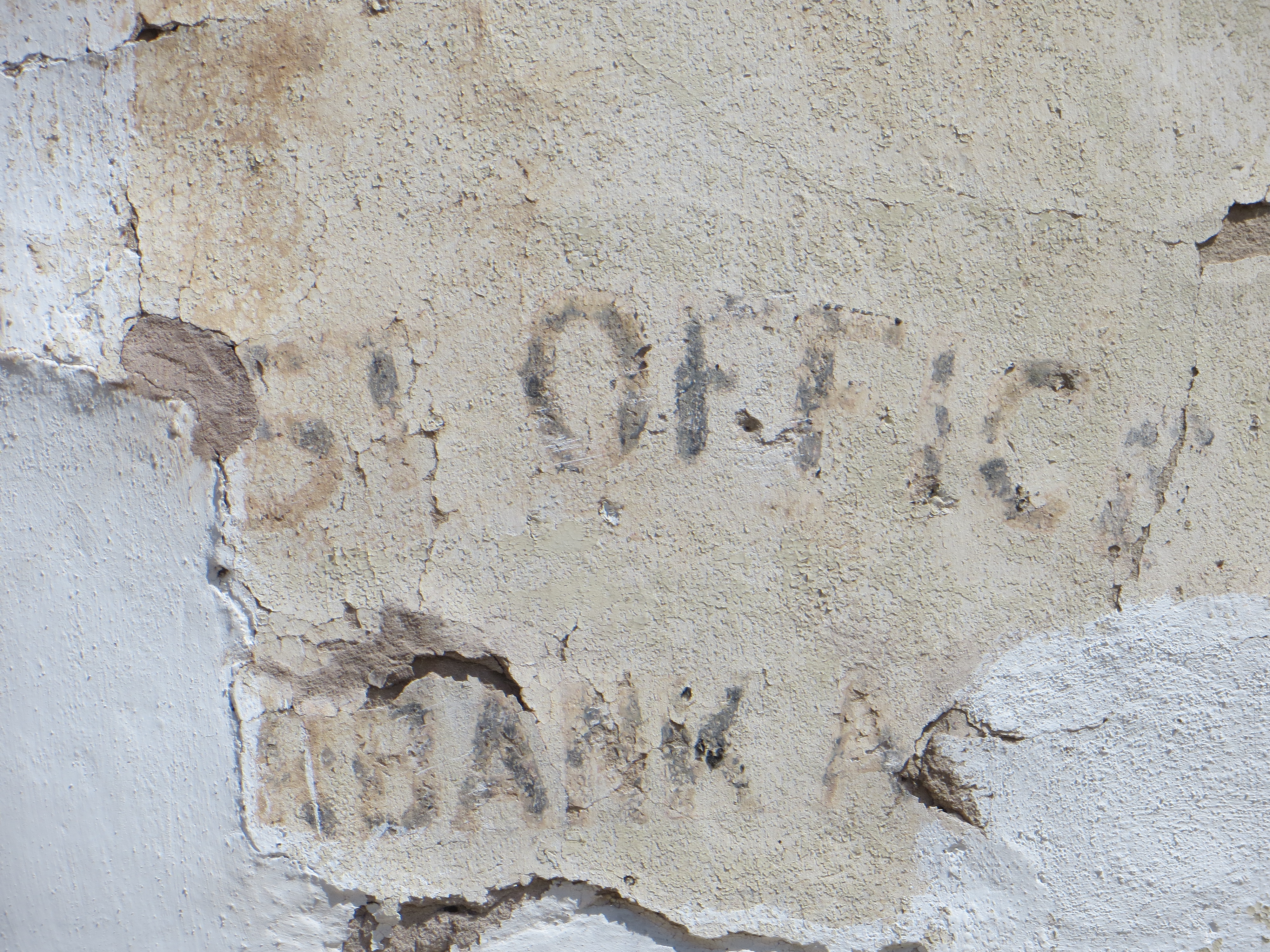
You can make out the words Post Office and Fairbank on mercantile building.
But let’s get back to our Old West train robbery story with its colorful characters. It’s a cautionary tale about what happens when one assumes that crime pays better than law enforcement. Bert Alvord and his partner in crime, Billie Stiles, were deputy sheriffs in Willcox, Arizona. Greedy for more than their modest salaries provided, they organized a gang and began robbing trains. As the local investigators into the robberies, Alvord and Stiles could often damage evidence that pointed to them. For a time, crime did indeed pay for them.
Back in the 1890s, payroll wasn’t wired to accounts. Money was physically moved on trains by Wells Fargo and paid out to workers. After a few successes with train robbery, Alvord and his boys decided to go for a big haul and rob the Wells Fargo Express car on the train bringing the Fort Huachuca payroll to Fairbank.
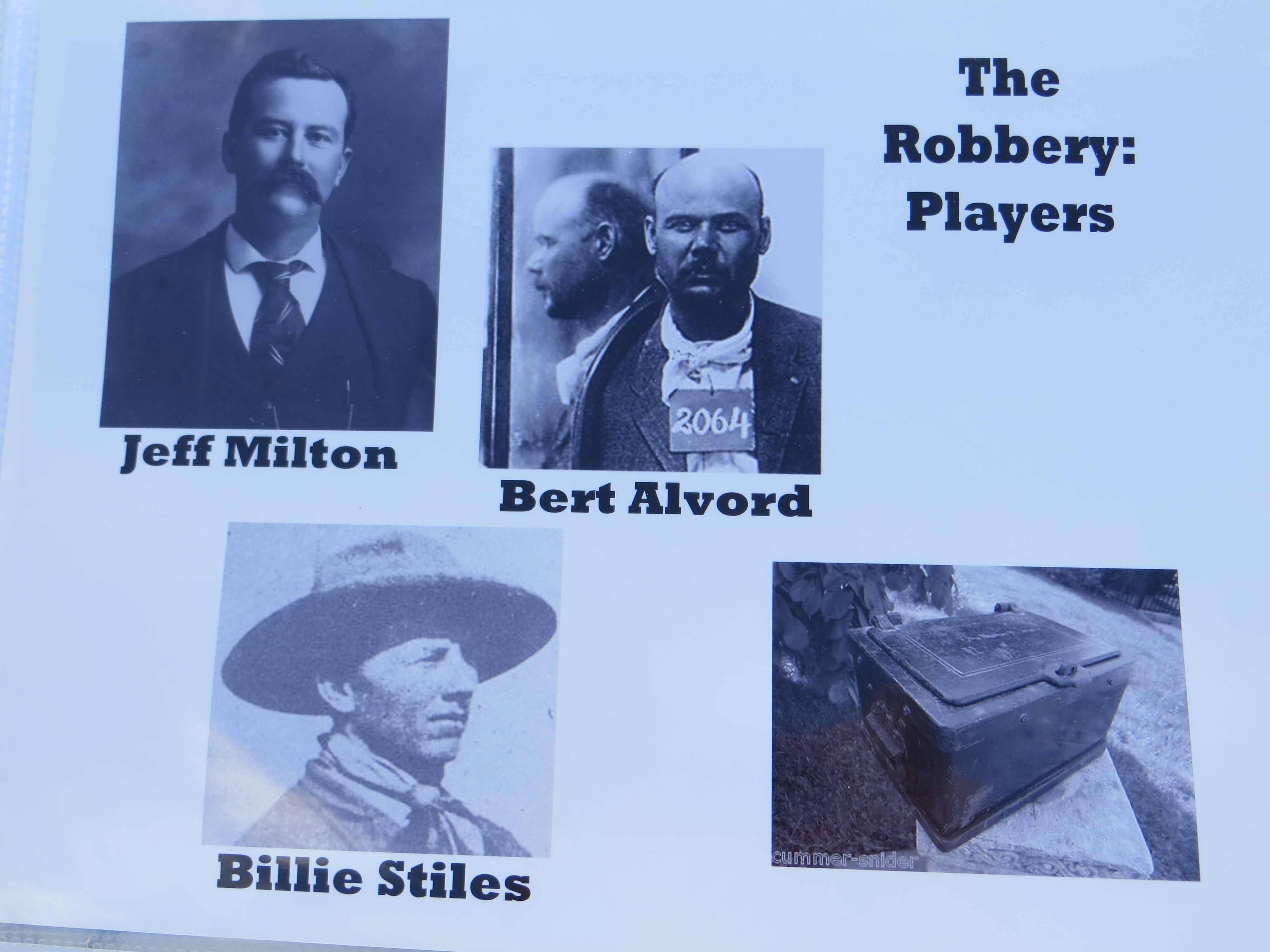 Unfortunately, on Feb. 15, 1900, they weren’t banking on legendary lawman Jeff Milton filling in for a Wells Fargo Express agent who called in sick. Milton was a former Texas Ranger and the first Border Patrol agent (he was issued badge Nr. 1). Milton was shot in the left arm protecting the payroll, put a tourniquet on his arm and successfully shot and killed Three Fingered Jack, threw the keys to the safe into a stack of packages and then passed out. Bert and his gang absconded with only a few dollars for their efforts and were later caught. It was one of the last train robberies in the Old West.
Next, tour guide Ron took us out to the Fairbank cemetery. It sits on top of a hill less than one-half mile from the mercantile. As I walked along the trail I could can see evidence of foundations indicating former homes.
The cemetery isn’t showy. There are no headstones indicating dates. Only piles of stones with modest wooden crosses that have fallen on top of them. What the cemetery does offer however, is a spectacular view of the valley.
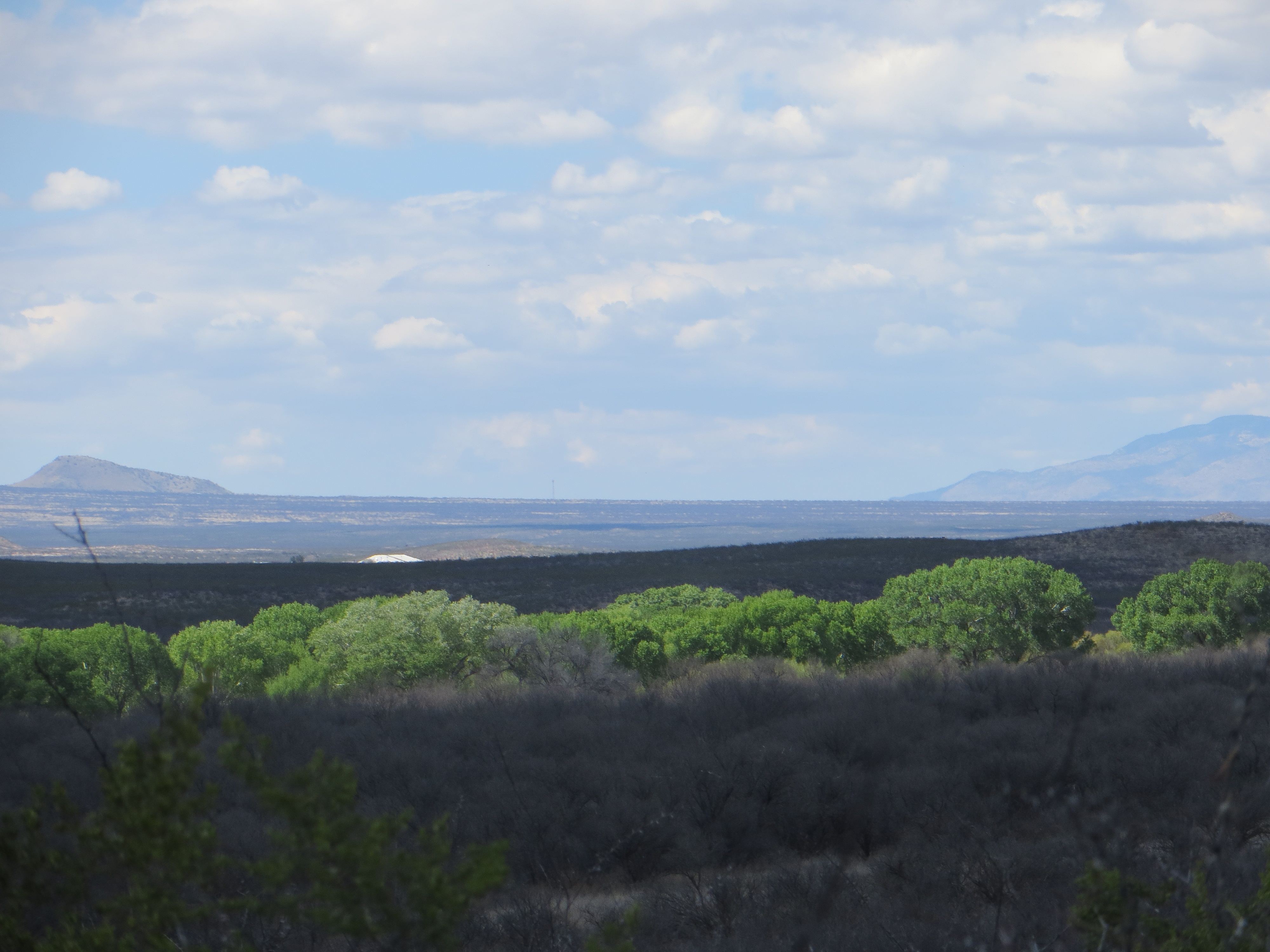
The view from the Fairbank Cemetery. The San Pedro River can be found if you follow the green ribbon of cottonwood trees. This riparian area serves as a superhighway for migratory birds and even boasts a population of beavers.
After a stroll down the hill back into town, I hear echoes of the past. Maybe it was the sound of motorcycle groups riding to Tombstone or maybe the memory of a train bringing the payroll and luxury items into Fairbank. With my new-found knowledge of the Old West history in my own backyard, I like to think it’s the latter.
 Compelling Curiosity