Discovering a Borderlands Community in Arizona

My husband and I headed to Camp Naco in southern Arizona on a Saturday morning to see where Buffalo Soldiers played baseball and learn about the outlaw Cactus League formed in 1910. Like many historic locations, the actual structure is long gone but a gifted storyteller skillfully laid out historical facts along with a few artifacts to help us to visualize the field. 

After viewing the field, we got in our cars to drive to the elementary school in the small town of Naco for his formal presentation.

This was a first for me. Naco is a place I typically drive past on a visit to Bisbee. I have an awareness that a small number of people live there but that’s pretty much it. While navigating the streets to the school, I catch a glimpse of a Mexican flag on the horizon.

The Mexican flag flies over Naco, Sonora on the southern border.

The baseball presentation was very interesting, even for a person like me who isn’t particularly into the sport. It helped me understand the popularity of a game in small towns across America and Mexico during a time without radio, television or internet.

An hour later it was time to get back in my car and drive home, but I wanted a closer look at the Mexican flag I had seen earlier. I didn’t have far to travel. Less than a block away was Towner Street which leads to the Naco Port of Entry.

I live in southern Arizona. The idea that our shared border is part of the landscape is something those of us who live here are familiar with. I used to drive to Nogales, Arizona (about 45 minutes away) to walk over to Nogales, Sonora for a quick shopping trip and lunch. I haven’t done that in more than 15 years. I live in the southeastern corner of the state in Cochise County. I drive through a Border Patrol checkpoint inside the U.S. every time I head to Tucson. It’s not uncommon to see their vehicles in the streets here. Over the past five years it’s become a regular thing to see them in high speed pursuits of human smugglers through our communities. Turns out that most of these drivers are American teenagers recruited on social media with the promise of $1K per head. Some aren’t even old enough to have a drivers license and their sketchy driving while being chased by law enforcement has lead to serious accidents and even a couple of deaths. 

Just up the road from my home is the Army installation I worked on for more than 25 years. It is now the headquarters for the military southern border mission bringing an additional 500 Soldiers to my community and regular helicopter traffic. That’s not really all that shocking. In retirement I’ve taken up the mission of telling the stories of Soldiers who were here more than 100+ years ago to conduct a similar mission.
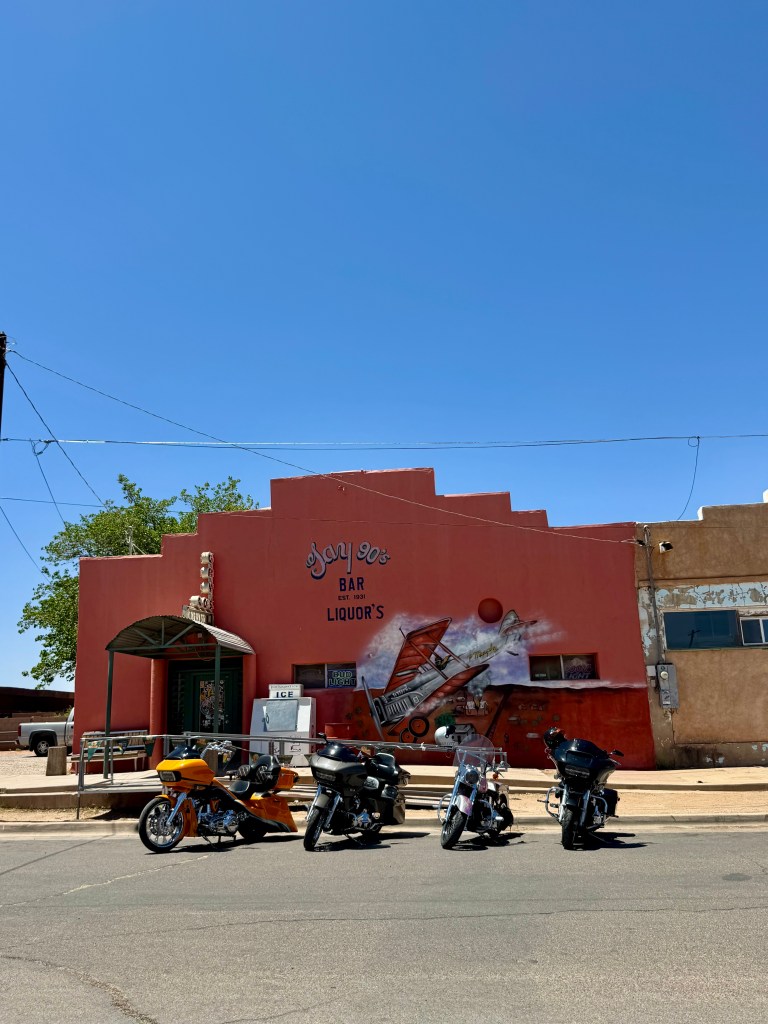
The Gay 90s Bar has been wetting border visitors’ whistles since 1931. A painting of Patrick Murphy’s accidental bombing of the town adorns the front of the building.

As I got out of my vehicle to walk down Towner Street to our border with Mexico, the view in front of me wasn’t seen through a filter of drugs, human misery, cartels and violence but one of small communities co-existing. I bumped into our baseball historian who invited me into the Gay 90s Bar for a drink and presumably colorful stories. Lou waited patiently in the car while I played documentarian so I asked for a rain check. Before I continued my stroll, the historian recommended a nice restaurant on the Sonoran side of the border and shared a story about a local entrepreneur who ran a bus service for Soldiers to visit the bustling red light district across the border. During Prohibition, visitors parked their vehicles on the Arizona side to cross over to Mexico.

Naco has earned an interesting historical footnote for being the first aerial bombardment of the continental United States by a foreign power. 

The incident took place in during the Escobar Rebellion in 1929. Rebel forces battling Mexican Federales for control of Naco, Sonora hired mercenary pilot Patrick Murphy to bombard government forces with improvised explosives dropped from his biplane. Miscalculating the locations of his targets, Murphy mistakenly dropped suitcase bombs on the American side of the international border on three occasions. This caused quite a bit of damage to private and government-owned property, as well as slight injuries to some American spectators watching the battle from across the border. A depiction of Murphy in his biplane adorns the wall of the Gay 90s bar commemorating the bombing.

When hostilities waned in the region, the Naco Hotel advertised its rooms as “bulletproof.”

The remnants of the Naco Hotel still stand. Once advertised as safe from violence on the Mexican side of the border, locals still refer to it as the Bulletproof Hotel.

Ghosts of boarded up buildings along a once busy street hint at a vibrant borderland. I look forward to coming back to the Gay 90s Bar for a thirst quencher and to learn more about the time Nancy Reagan visited and got a bit tipsy. Maybe with some liquid courage I’ll walk through the port of entry to eat a meal in Mexico.

I live in a place where everything the light touches is the border. It isn’t some distant, ominous presence making headlines. It’s a place populated with resilient people withstanding the winds of change and it’s much closer than I realized.

Faded signs on abandoned buildings line a formerly thriving thoroughfare.

Take It Easy In Winslow, Arizona

Winslow 3

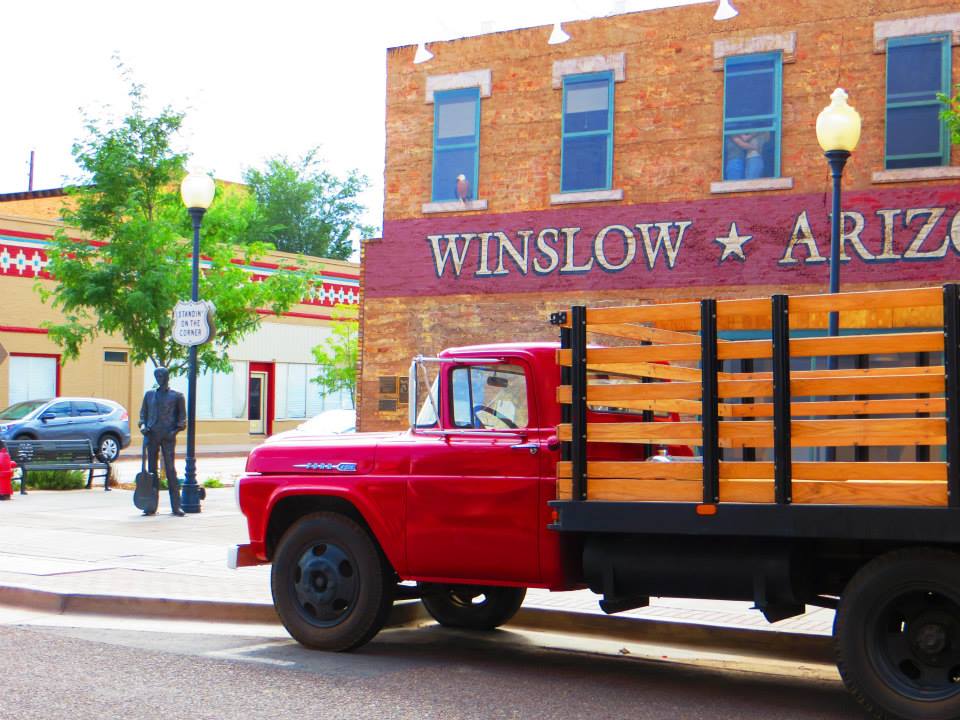
The famous corner and the flatbed Ford. If you look closely, an eagle is painted on the upper left window ledge in an homage to the group who immortalized the area in song.

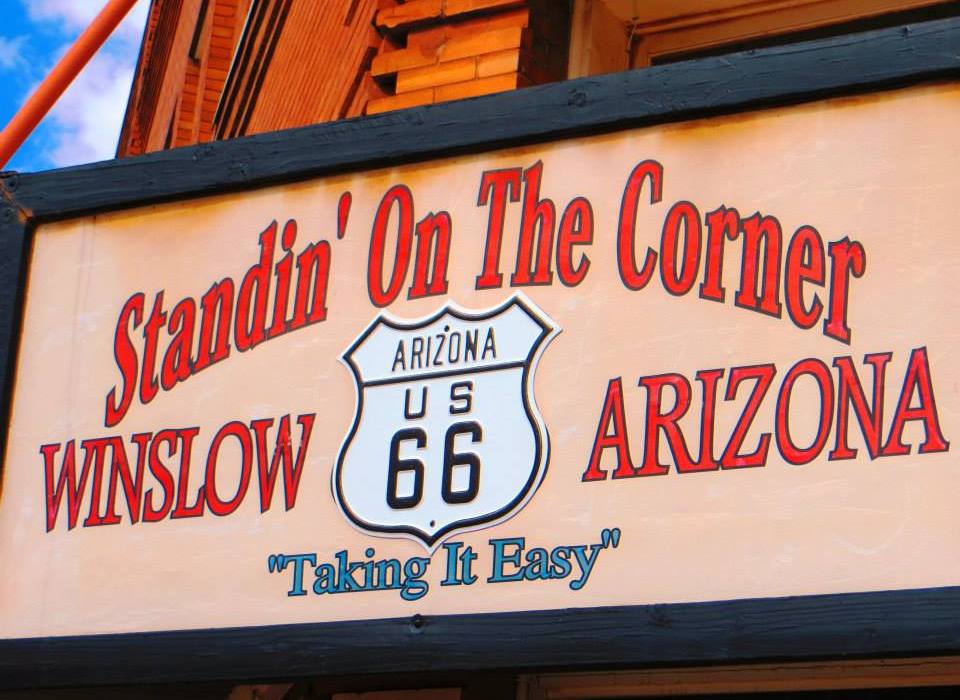
Why Winslow? A mention of Winslow, Arizona immediately brings to mind the popular Eagles’ song, “Take It Easy.” You may not remember the lyrics to the entire song but you probably can sing, “Well I’m standin’ on the corner in Winslow, Arizona and such a fine sight to see. It’s a girl, my lord in a flatbed Ford, slowin’ down to take a look at me.” Whether you’re in a flatbed Ford or some other mode of transportation, you can slow down and actually take a look at the famous spot immortalized in song at the Standing on the Corner Park on 2nd Street. A gift shop across the street continuously plays Eagles music, including “Take It Easy,” to help you get in the mood.

After you’re done standing on the corner, you can get your kicks on Route 66. The Mother Road, as Route 66 is sometimes called, runs right through this part of northern Arizona. Established in November 1926, in its heyday the famed road stretched 2,448 miles from Chicago to Santa Monica, California. Route 66 served as the route for those who migrated west, especially during the Dust Bowl of the 1930s. And much like the famed corner, the Mother Road is immortalized in song. “Route 66,” which made the phrase “get your kicks on Route 66” famous, was first published in 1946 and has been recorded by a variety of artists. Download your favorite version and add it to your Winslow playlist to celebrate the romance and freedom of travel on the open road in a bygone era. This iconic American highway even had its own television show in the 1960s, “Route 66.”

Turquoise Car

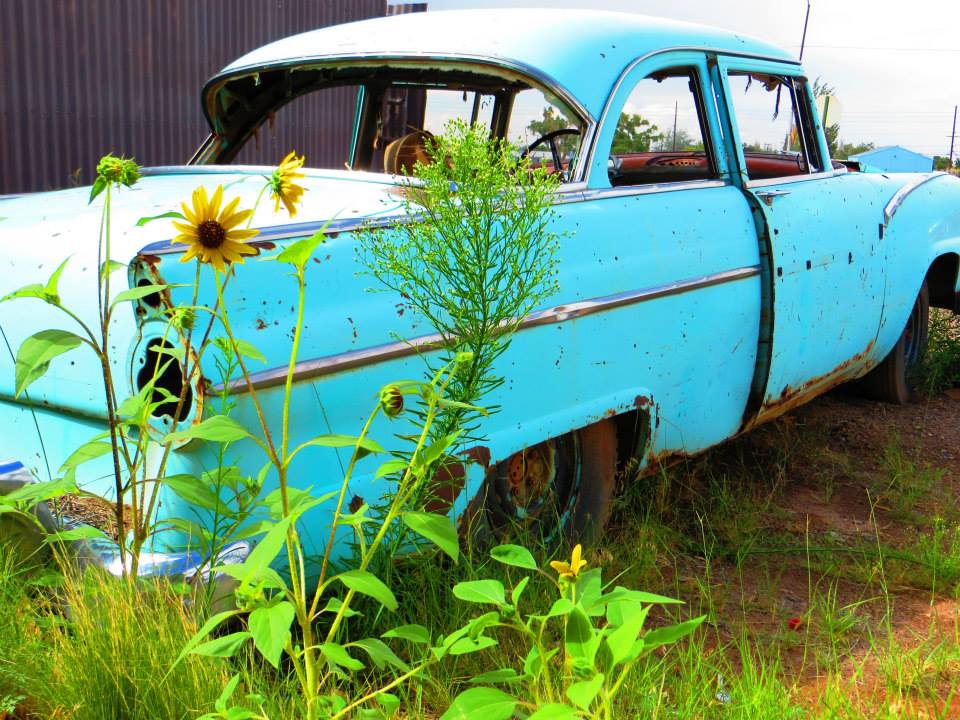
You don’t have to look hard for remnants of Winslow’s Route 66 history.

Route 66 was officially no long part of the U.S. Highway system by June 1985. It had been replaced by the Interstate Highway System. Portions of the road have been designated a National Scenic Byway named “Historic Route 66.” It’s not unusual to see vintage cars or groups of motorcyclists enjoying the nostalgia of the Mother Road on these stretches.

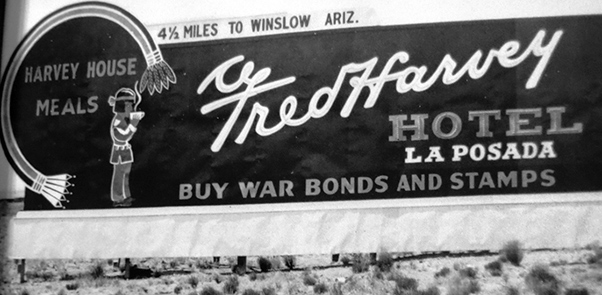
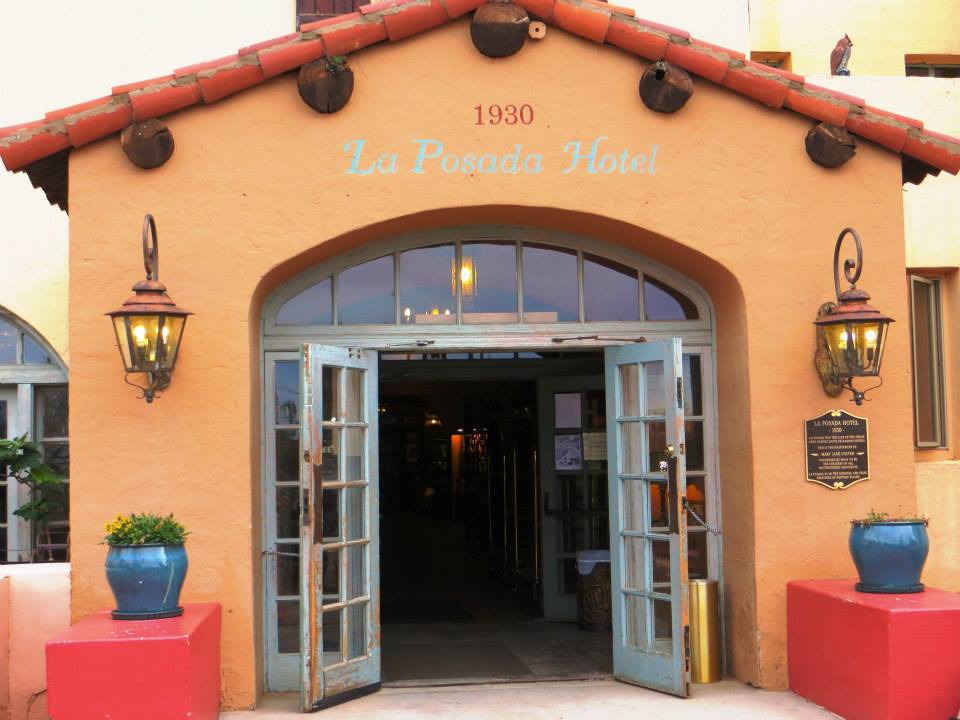
Less than two blocks from the famous corner is another iconic landmark to American travel. La Posada, the resting place, was one of the Fred Harvey’s famed hotels. Fred Harvey was an entrepreneur who developed the Harvey House lunch rooms, restaurants, souvenir shops and hotels. An innovative restaurateur and marketer, Fred Harvey is credited with creating the first restaurant chain in the U.S. and was a leader in promoting tourism in the American southwest in the late 19th and early 20th centuries. Built in 1929, La Posada was to be the finest hotel in the southwest. Construction costs alone exceeded $1 million in 1929 and the total budget with grounds and furnishings was rumored to be $2 million (about $40 million in today’s dollars). The hotel was designed by American architect Mary Elizabeth Jane Coulter. Coulter considered La Posada her masterpiece. She designed the entire resort from the building to its gardens, furniture, china—even the maids’ uniforms. Coulter built 21 projects for Harvey, but this hotel was her favorite. Winslow was chosen as the location for this grand hotel because it was the Arizona headquarters for the Santa Fe Railway and popular destinations like the Painted Desert and the Grand Canyon were within a day’s drive.

Harvey popularized travel to the west by introducing linen, silverware, china, crystal, and impeccable service to railroad travel. Harvey’s standard of hospitality and the waitresses he employed, became so popular that it spawned the movie “Harvey Girls” starring Judy Garland in 1946. The Fred Harvey legacy survived until the death of his grandson in 1965. Elements of the Fred Harvey Company have continued to operate since 1968 as part of a larger hospitality industry conglomerate. The Santa Fe railroad closed La Posada hotel in 1957 and it was used as an office building. At some point, this former grande dame of railway hotels was abandoned and fell into disrepair.

Winslow 2

A picture of a La Posada billboard from the 1940s decorates a wall in the Amelia Earhart room of the hotel. Rooms at the hotel have a modern numbering sequence but are also named after celebrities of the 40s, 50s and 60s.

The hotel’s current owners have lovingly restored it to its former glory. Dine in the Turquoise Room on food La Posadagrown in the hotels gardens and be served by waitresses wearing the traditional Harvey Girl aprons. Relax in the gardens and watch the trains go by. All guests receive a history of the hotel when they check in. You’re free to explore the hotel on your own, or sign up for one the historic tours given regularly by retired Harvey Girls. La Posada now regularly earns a spot on the list of top historic hotels in the U.S.

If overnighting in a historic railway motel isn’t quite your thing, you might want to give a wigwam a try. Cruise Winslow 3down Interstate 40 to Holbrook for another authentic experience on Route 66, and check in to your very own teepee at the Wigwam Motel. Each of the 12 rooms is in a separate teepee building. Built in the 1950s, the popular motel fell out of the spotlight when it was bypassed by the interstate in the 1970s. It has regained favor with a new generation of travelers seeking Route 66 nostalgia. The vintage cars parked throughout the property reinforce the motel’s connection with the Mother Road. Whether you just want to stand on the corner or get your kicks, Winslow is a great destination to personally experience the heritage of travel in the American southwest.

How the West is Fun: Touring a Southern Arizona Ghost Town

IMG_2664

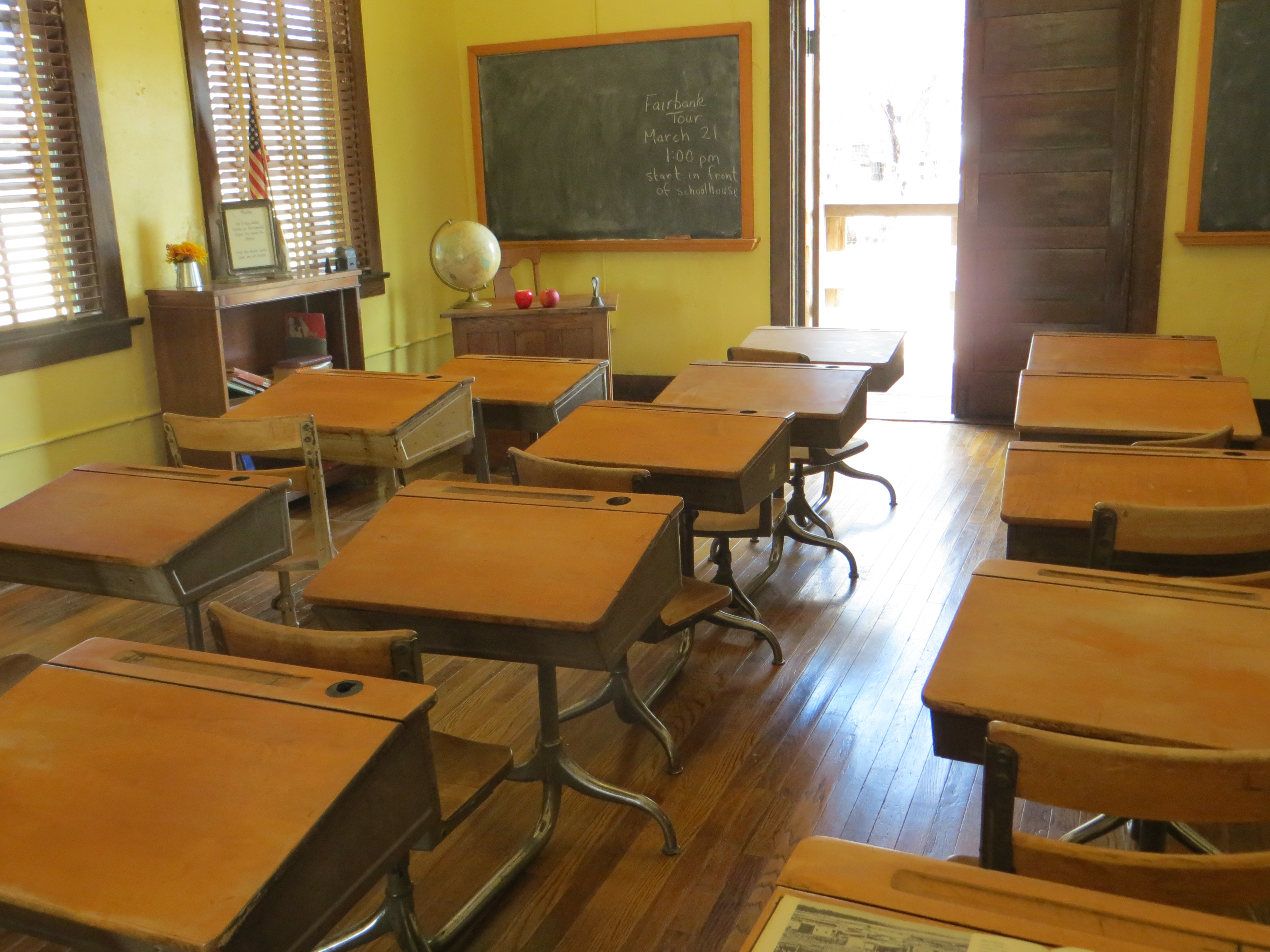
A look inside the two-room Fairbank schoolhouse.

Fairbank SchoolThink of the Old West and images of gunslingers, saloons and the railroad come to mind.  Just eight miles outside Tombstone, you get all that and more in Fairbank, one of the best preserved ghost towns in Arizona.  As folks moved West to mine and ranch, towns sprang up all over Cochise County in southeastern Arizona.  Some of these towns didn’t survive when the mining industry or cattle business went bust in their area.

Fairbank doesn’t get the traffic of its famous neighbor down the road, but this ghost town with a well-documented history doesn’t disappoint.  In addition to some fairly well-preserved buildings, there’s a great train robbery story with a famous Western law man and a gang of outlaws with names like Three Fingered Jack and Juan Bravo.  Although less known, the Fairbank Robbery rivals the story of the shootout at the O.K. Corral.

Situated next to the San Pedro River, Fairbank was first settled in 1881.  It was the closest train station to Tombstone.  Luxury goods and freight for Tombstone came in through the town and ore and cattle went out. On the opposite side of Highway 82  from Fairbank, you can still see the livestock pens where cattle were held for transport.

IMG_2703

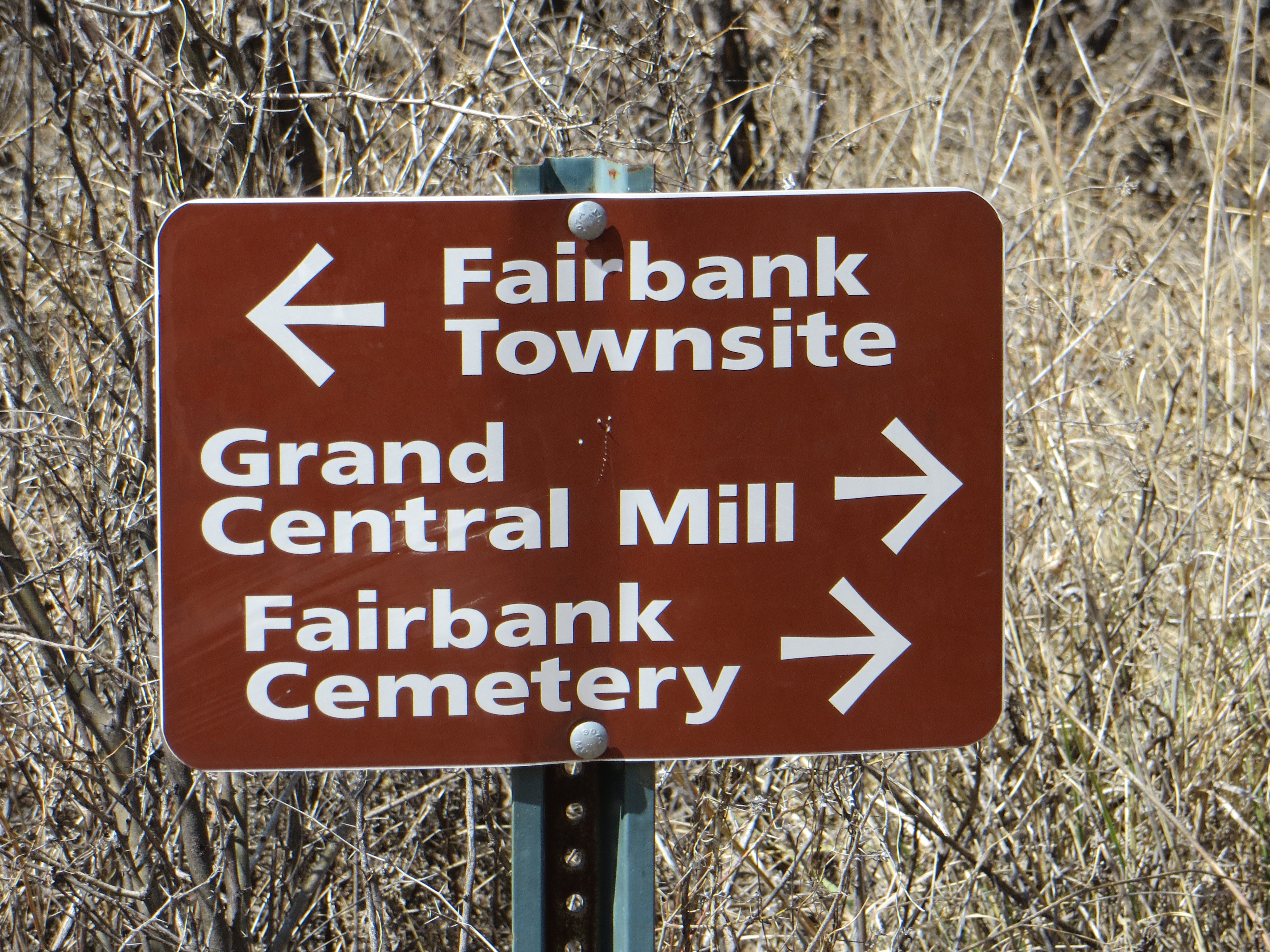
Fairbank is well-maintained by the Bureau of Land Management.  You can tour the town on your own.  There are lots of signs to point you in the right direction and stop by the Fairbank Schoolhouse (the best preserved building in town) where you can learn more about the town’s history, buy an ice cold bottle of water and purchase souvenirs.

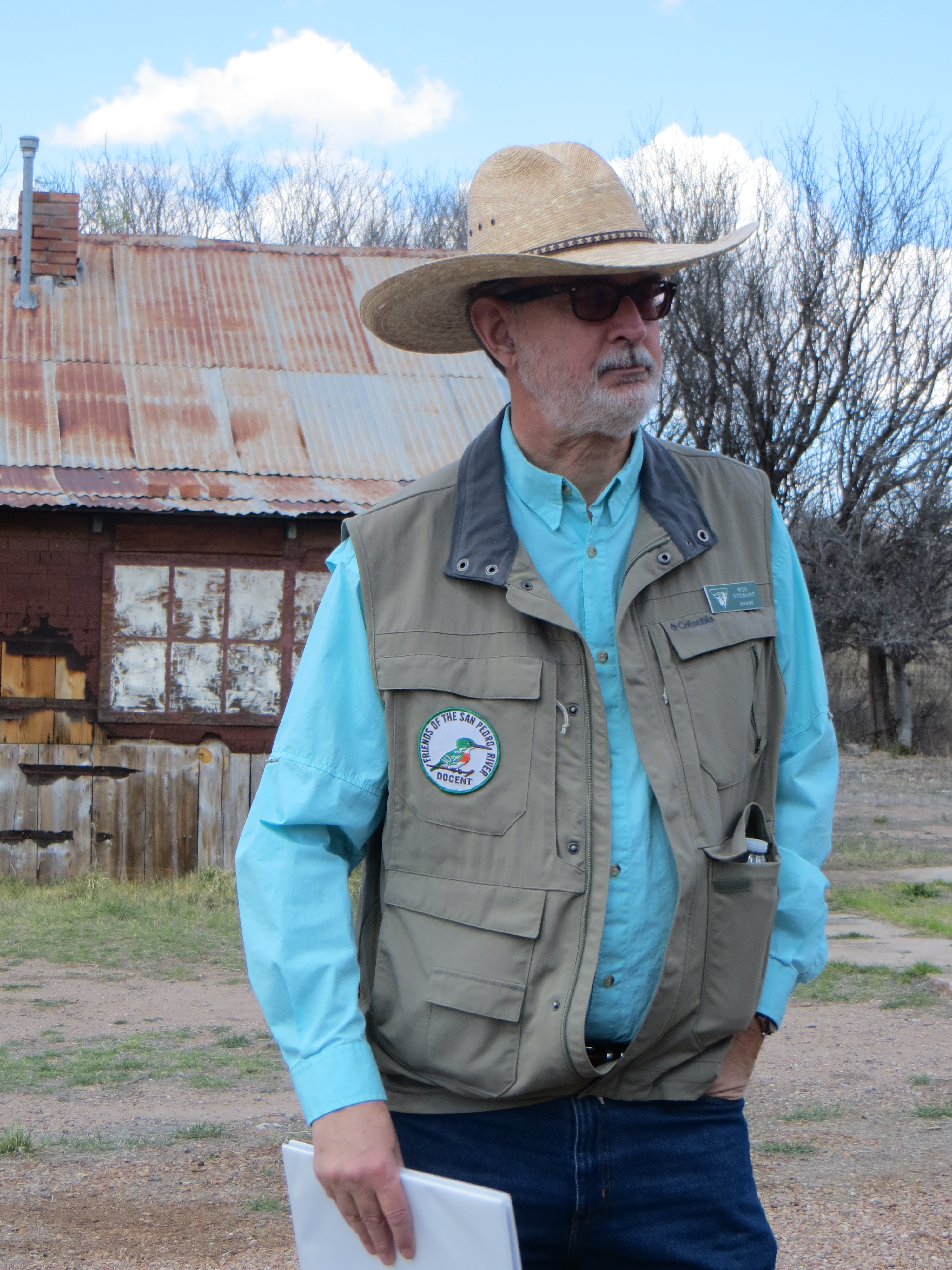
Docent Ron Stewart helps you find the echoes of the past in Fairbank.

Docent Ron Stewart helps you find the echoes of the past in Fairbank.

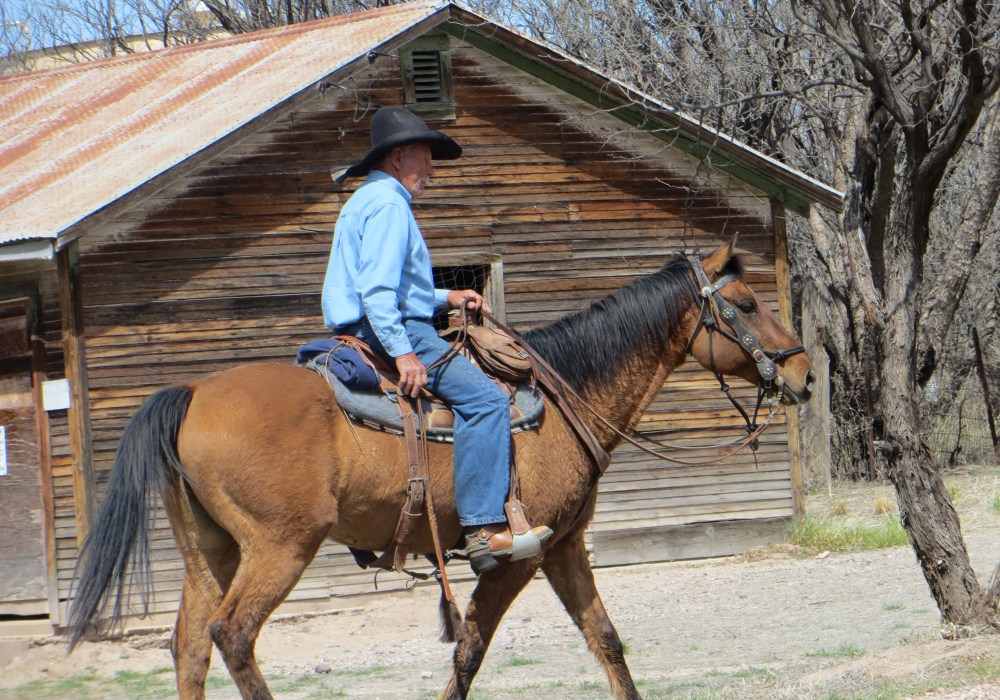
You can also take a tour led by a docent from the Friends of the San Pedro River.  I took a tour led by Ron Stewart.  He worked on Fort Huachuca and for the BLM in the Four Corners area.  He is extremely knowledgeable and well-versed in the history of Fairbank.  Ron reminded tour participants that visiting a ghost town wasn’t like visiting a museum where exhibits bring history to life.  Here, he instructed us, we had to look for echoes of the past.

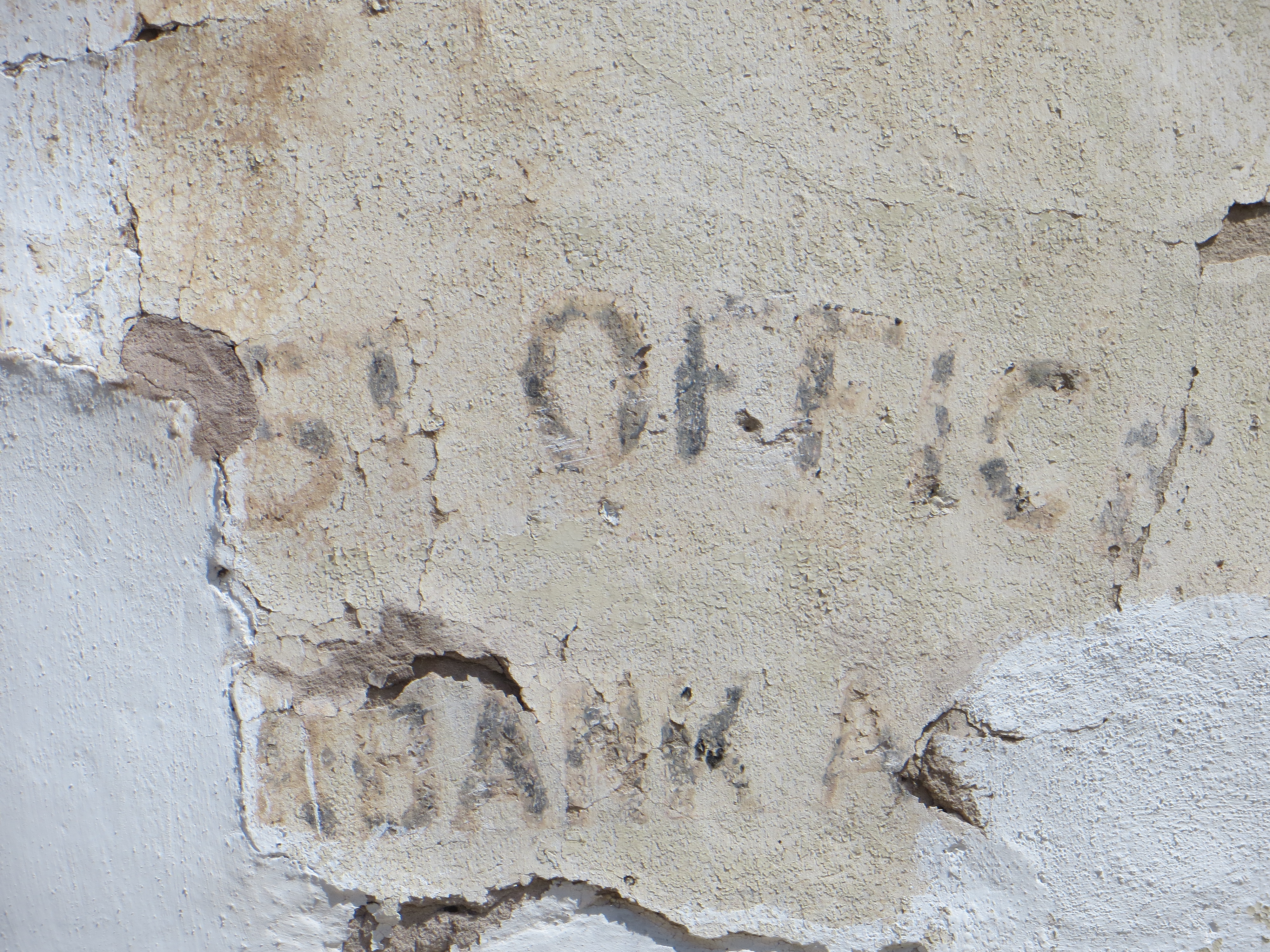
From the school house we move on to the mercantile.  It served as a store, post office and gas station in it’s time.  Next door to it at one time was the Montezuma Hotel and the train station, also no longer there, was located across the street.  The railroad came through Fairbank until the 1960s.

You can make out the words Post Office and Fairbank on mercantile building.

You can make out the words Post Office and Fairbank on mercantile building.

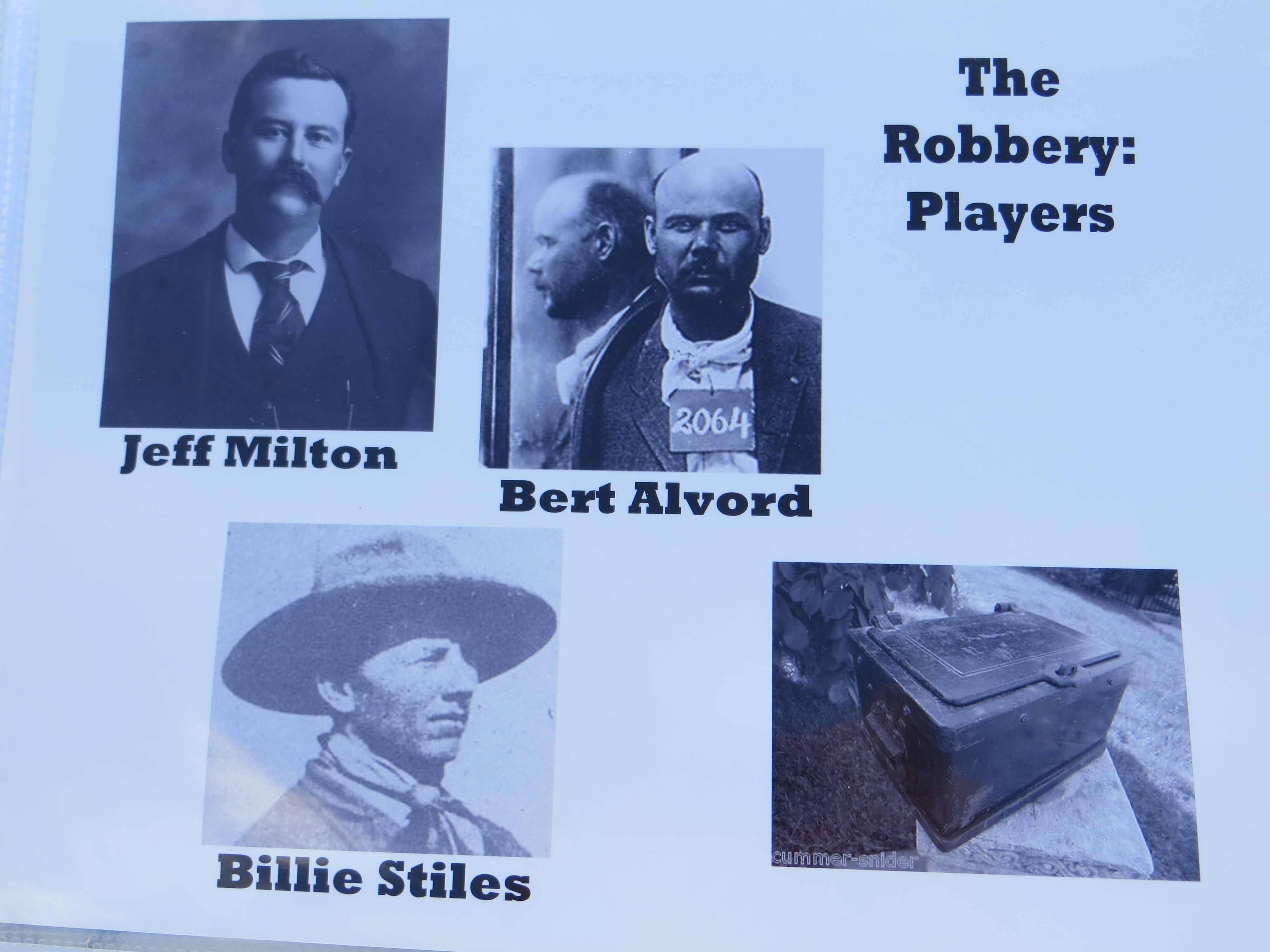
But let’s get back to our Old West train robbery story with its colorful characters.  It’s a cautionary tale about what happens when one assumes that crime pays better than law enforcement.  Bert Alvord and his partner in crime, Billie Stiles, were deputy sheriffs in Willcox, Arizona.  Greedy for more than their modest salaries provided, they organized a gang and began robbing trains.  As the local investigators into the robberies, Alvord and Stiles could often damage evidence that pointed to them.  For a time, crime did indeed pay for them.

Back in the 1890s, payroll wasn’t wired to accounts.  Money was physically moved on trains by Wells Fargo and paid out to workers.  After a few successes with train robbery, Alvord and his boys decided to go for a big haul and rob the Wells Fargo Express car on the train bringing the Fort Huachuca payroll to Fairbank.

IMG_2712Unfortunately, on Feb. 15, 1900, they weren’t banking on legendary lawman Jeff Milton filling in for a Wells Fargo Express agent who called in sick.  Milton was a former Texas Ranger and the first Border Patrol agent (he was issued badge Nr. 1).  Milton was shot in the left arm protecting the payroll, put a tourniquet on his arm and successfully shot and killed Three Fingered Jack, threw the keys to the safe into a stack of packages and then passed out.  Bert and his gang absconded with only a few dollars for their efforts and were later caught.  It was one of the last train robberies in the Old West.

Next, tour guide Ron took us out to the Fairbank cemetery.  It sits on top of a hill less than one-half mile from the mercantile.  As I walked along the trail I could can see evidence of foundations indicating former homes.

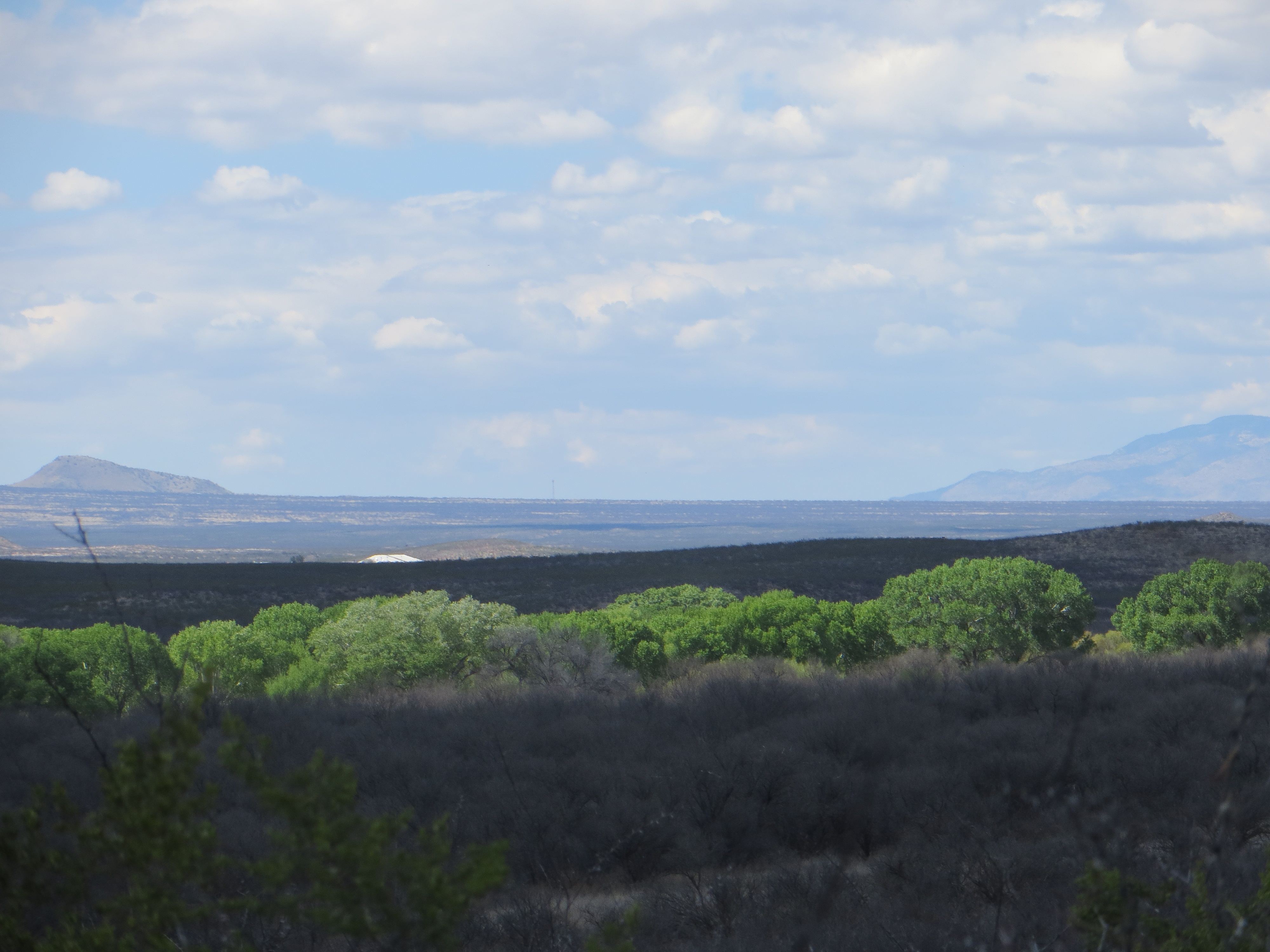
The cemetery isn’t showy.  There are no headstones indicating dates.  Only piles of stones with modest wooden crosses that have fallen on top of them.  What the cemetery does offer however, is a spectacular view of the valley.

IMG_2707

The view from the Fairbank Cemetery. The San Pedro River can be found if you follow the green ribbon of cottonwood trees. This riparian area serves as a superhighway for migratory birds and even boasts a population of beavers.

After a stroll down the hill back into town, I hear echoes of the past.  Maybe it was the sound of motorcycle groups riding to Tombstone or maybe the memory of a train bringing the payroll and luxury items into Fairbank.  With my new-found knowledge of the Old West history in my own backyard, I like to think it’s the latter.