
Banding Hummingbirds in the Huachucas
How do you band hummingbirds? Very, very carefully. Perhaps a better question is why do you band hummingbirds.
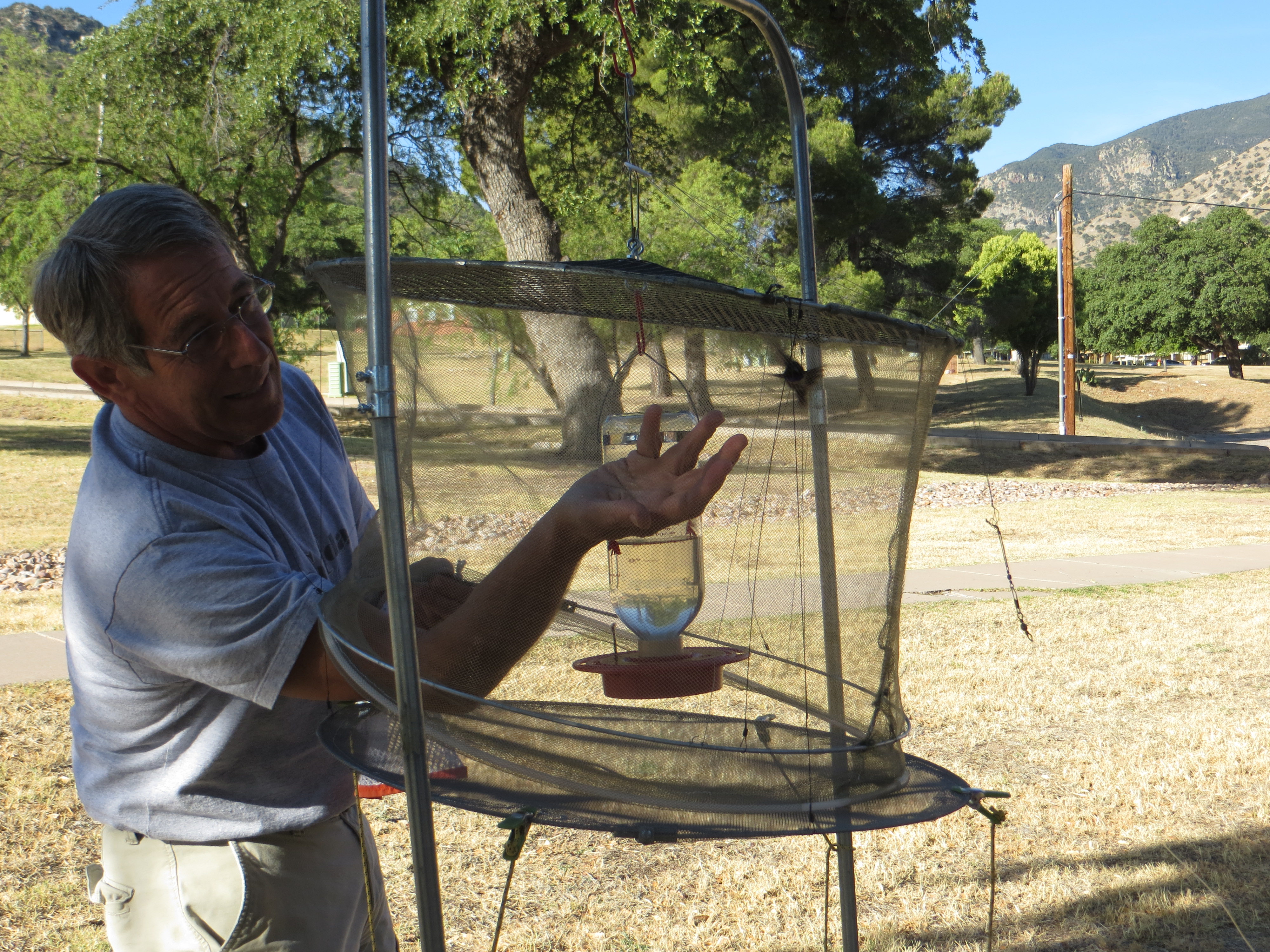
The Hummingbird Monitoring Network has been banding and collecting data on hummingbirds in front of the Public Affairs Office on Fort Huachuca for the past 11 years. This location is one of many where this is done in southern Arizona.
The Sky Islands of southern Arizona are a superhighway for birds migrating from Mexico up north. Some birds are just passing through, while others are seasonal visitors. Cochise County in southeastern Arizona is home to one of the most diverse populations of hummingbirds in North America. Put up a hummingbird feeder here and the tiny, jewel-toned birds will come.

On the particular Sunday I spend with the volunteers from HMN, Anna’s and Black Chinned hummingbirds were primarily banded. In between banding birds, permitted hummingbird monitor Laura Davis shared a story about one Rufous hummingbird she had banded. Eighteen days after banding and recording the bird’s data, he was re-captured. In British Columbia, Canada! These tiny birds really get around. Considering that for most of them the journey starts deep in Mexico, it is an awesome distance for something that only weighs about three grams to fly. Recording band numbers not only provides information about the number and types of birds in the area, but also is key to understanding their migration.
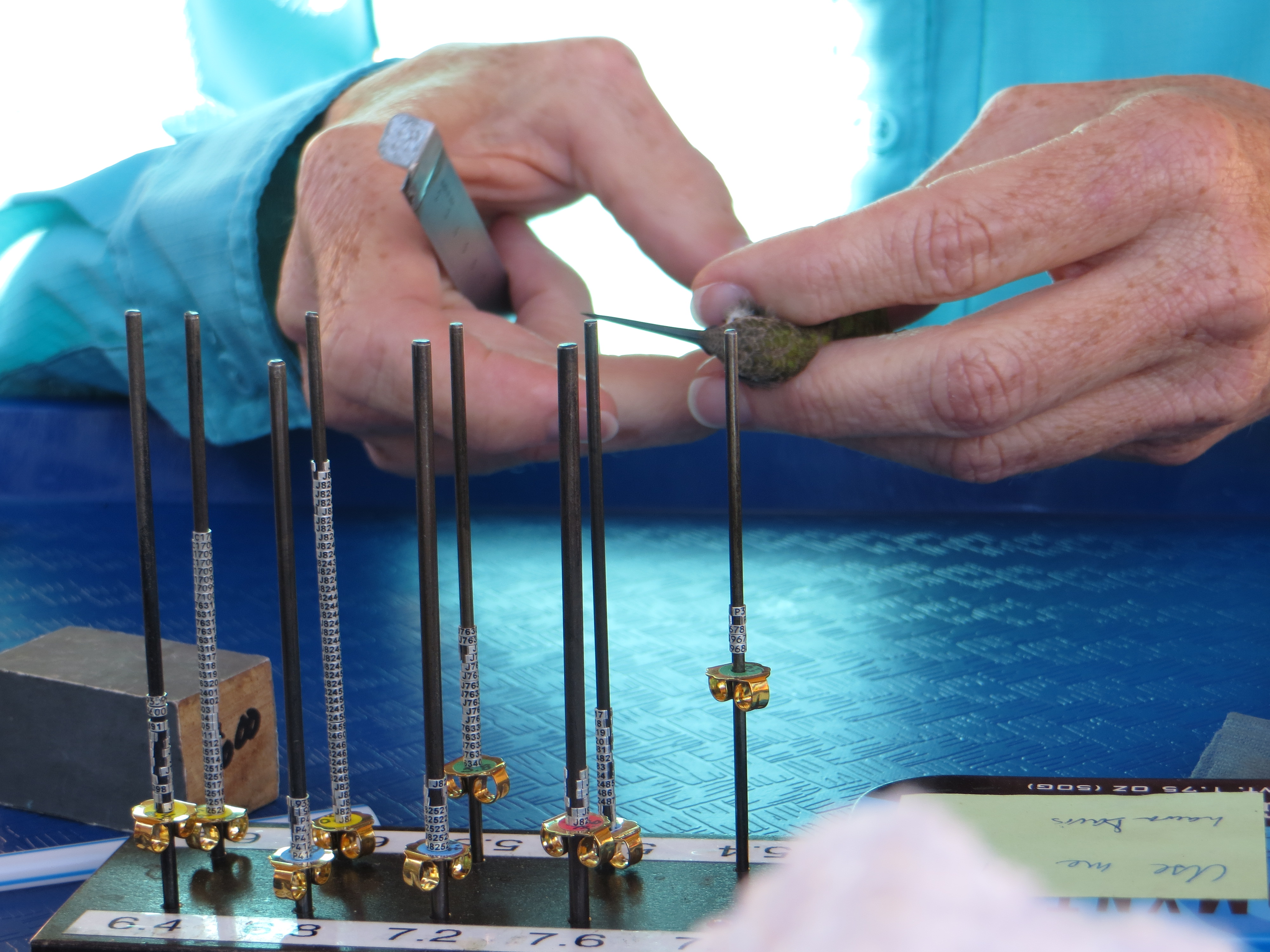
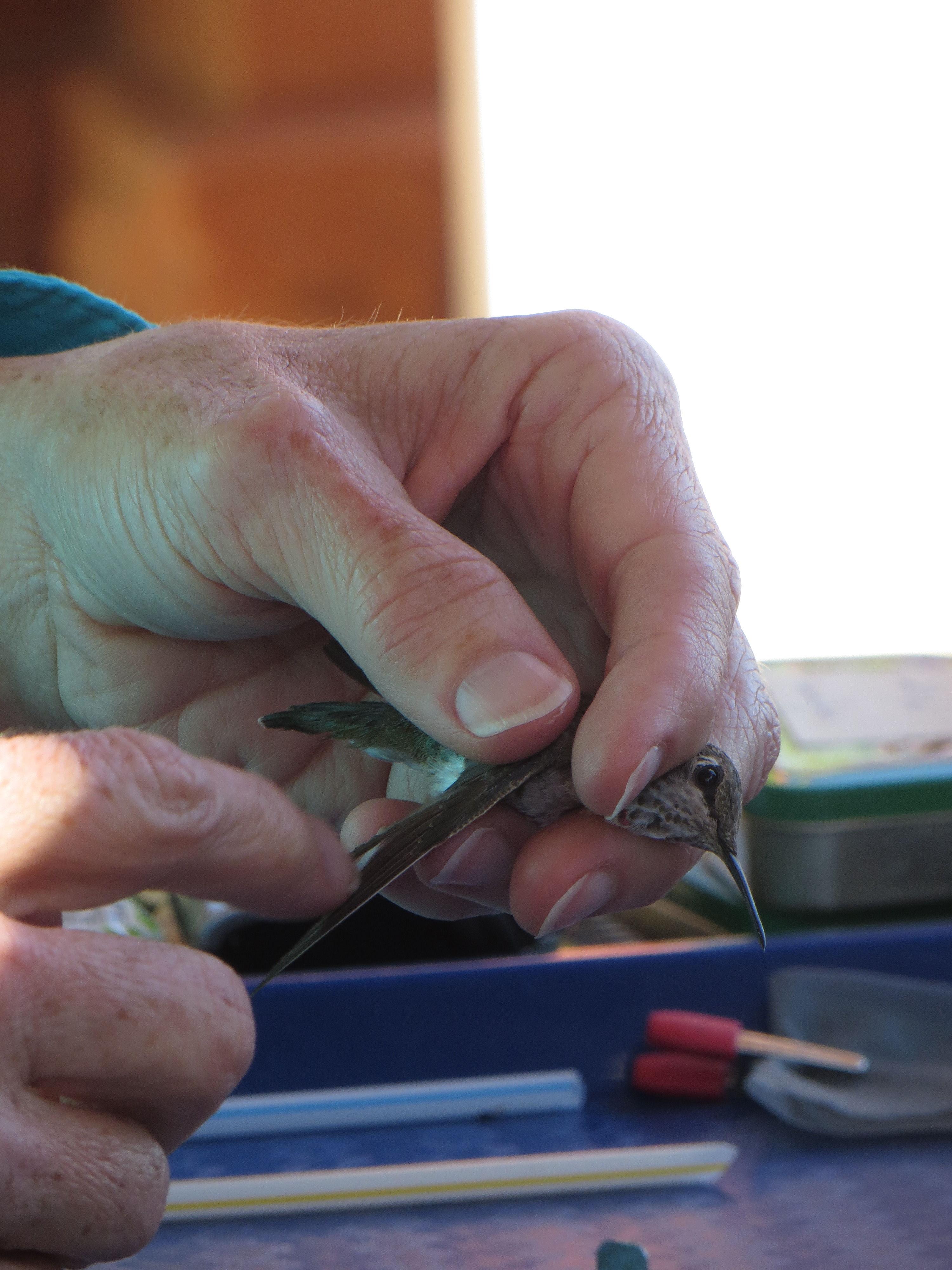
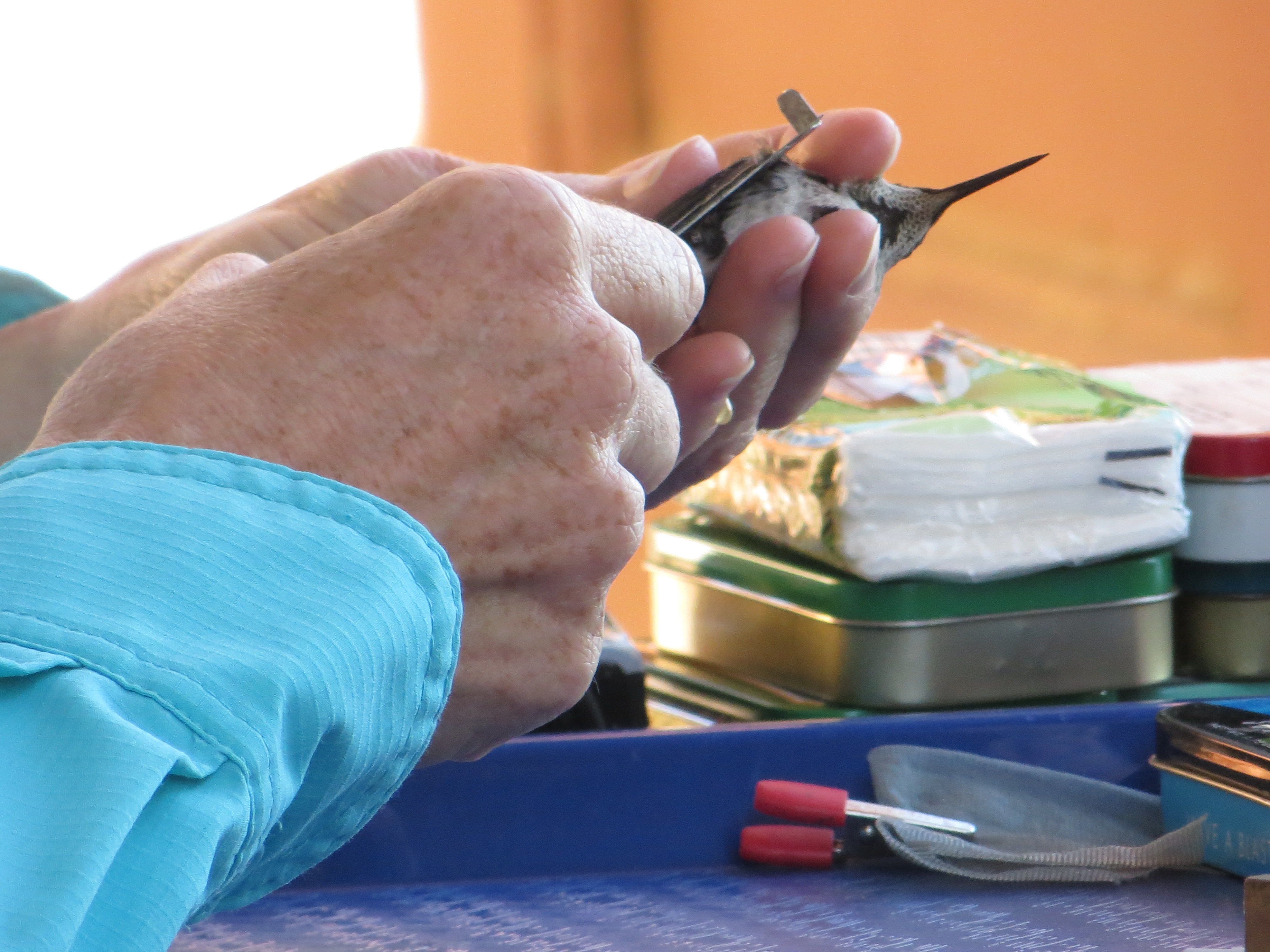
Once a bird is captured, Davis delicately checks for a previous band. If no band is present, she measures the bird’s legs for an appropriate-sized band. She then checks the gorget (band of feathers around the throat) to determine its age. The bird’s bill is measured, feathers checked for determine sex and then with a straw, she blows on the feathers on its throat and belly to determine how much fat the bird has stored. This is a key determination of a bird preparing for migration. It’s skin is red. If it appears to be creamy-colored it is a sign that the bird is fattening up to begin a major migration.
The hummingbirds are wrapped in a piece of mesh that is clipped at the ends and weighed. While all the birds are small, there are variations in size. I was on hand once when the volunteers captured a Broadbill and a Calliope, one being the largest humming bird in the area and the other the smallest. The difference in size was quite stunning.
After undergoing the stress of being weighed, measured and examined, the bird is rewarded with a sugary snack. Sometimes the birds fly away immediately, other times they will perch on a hand until they’re ready to leave.



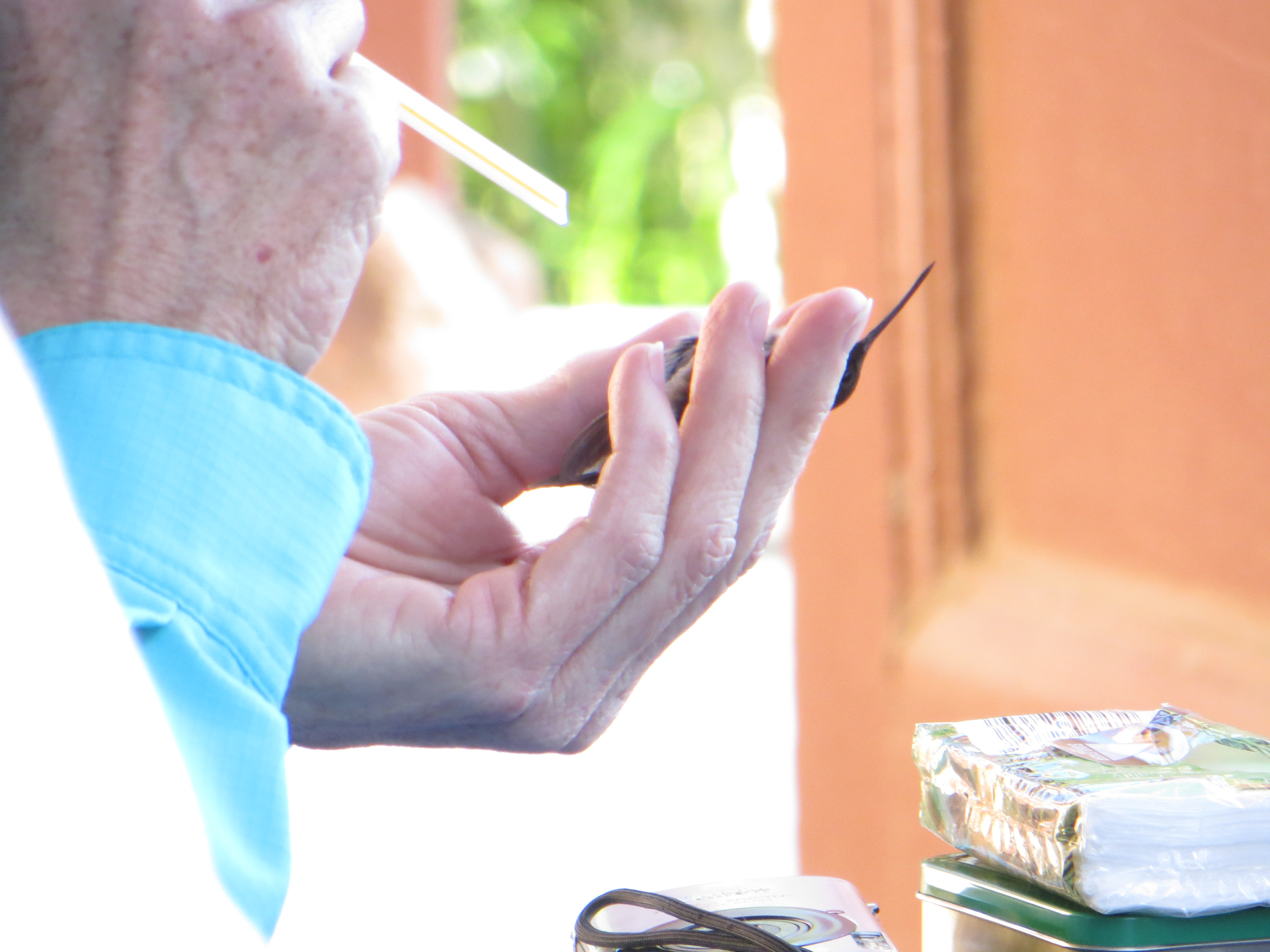

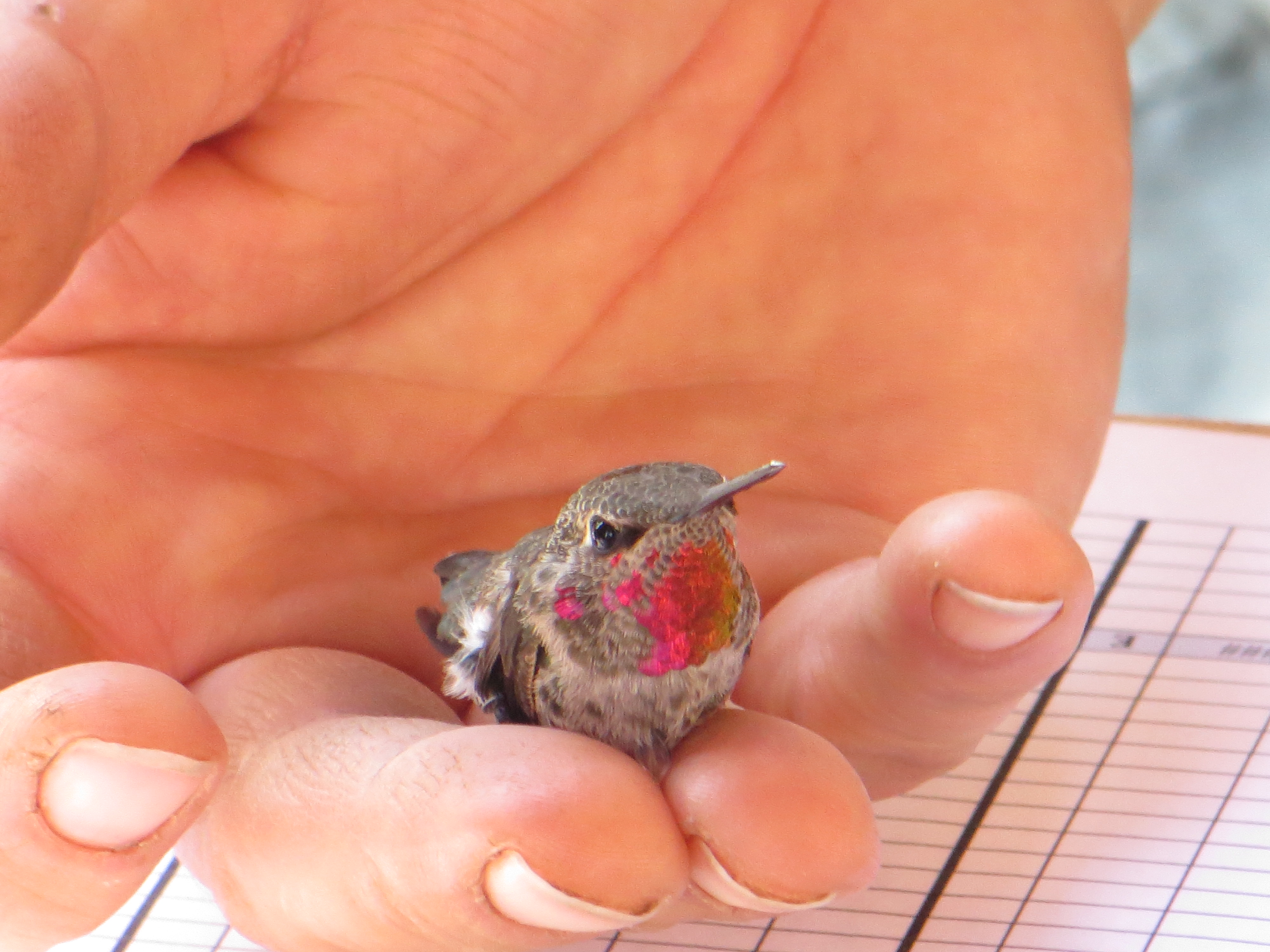
The Hummingbird Monitoring Network is a science-based, non-profit organization dedicated to the conservation of the birds’ diversity throughout the Americas. HMN focuses on monitoring hummingbirds to learn more about their populations and where they live and reproduce, conducting research to learn more about hummingbirds, educating the public about hummingbirds and restoring habitat.
Learn more about the HMN’s work and volunteer opportunities at http://www.hummonnet.org. Pay a visit to one of the banding sites when volunteers are in action. The volunteers are passionate about hummingbirds and will share their knowledge with you. If you’re very lucky, they might place a bird in your hand after it’s received its band and had its measurements taken. That is truly a once-in-a-lifetime experience.
 Compelling Curiosity